
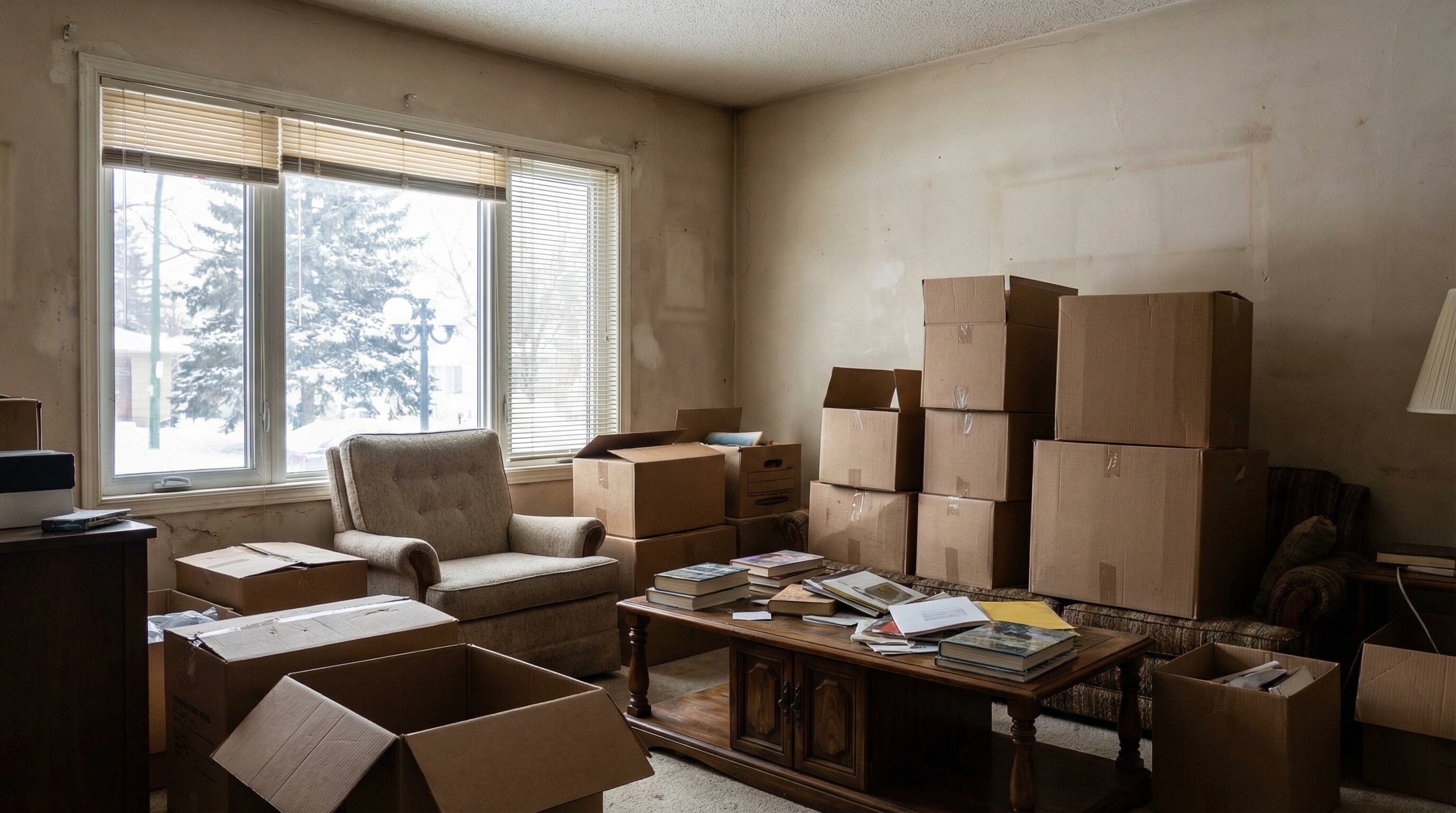
Most sellers don’t realize this until they’re standing in a packed living room: the stuff in the house is often harder to deal with than the house itself. You can decide to sell in a day. Clearing out 20 or 30 years of accumulated belongings is a different problem entirely.
If you’re selling because of a life change, financial pressure, or simply needing to move on quickly, you’ll find the full roadmap in our guide on how to sell your house fast in Winnipeg — including what cash buyers look for, realistic timelines, and what you’re allowed to leave behind when you close.
The good news is you have real options, and not all of them require hauling everything out before you can close.
Key Takeaways
– You don’t have to clear out a house before selling to a cash buyer. You take what matters, leave the rest.
– Junk removal in Winnipeg typically costs $500-$3,000+ depending on volume (1-800-GOT-JUNK Winnipeg, 2025).
– Furniture donations are accepted by organizations like Habitat for Humanity ReStore and Siloam Mission in Winnipeg, though items must be in usable condition.
– A home full of belongings does not automatically reduce a cash offer, but it does factor into the buyer’s post-purchase costs.
– Sellers who keep only what fits in a car or van, and leave the rest, close faster and with far less stress.
– The fastest path is almost always: sort what’s personal, donate what’s usable, leave the rest for the buyer to handle.
What Do Most Sellers Actually Leave Behind?
The volume of belongings left in homes during a fast sale is higher than most people expect. A 2022 survey by the Canadian Real Estate Association found that nearly 40% of sellers reported difficulty deciding what to keep versus discard during a sale (CREA, 2022). In homes where sellers are dealing with an estate, job relocation, or financial pressure, that number climbs higher. It’s not laziness. It’s an impossible task under a tight deadline.
Common categories of items left behind include:
- Furniture. Sofas, dining sets, bedroom furniture, appliances. Heavy, expensive to move, and often not worth the cost of a truck.
- Tools and garage contents. Lawn equipment, hand tools, seasonal gear. Garages are consistently the most neglected part of any cleanout.
- Personal collections. Books, records, hobby supplies, memorabilia. These take time to sort and donors don’t always accept them.
- Kitchen and household items. Dishes, small appliances, linens. Fast to accumulate, slow to deal with.
- Structural fixtures the seller wanted to take. Light fixtures, mirrors, window coverings. Sellers sometimes intend to move these and run out of time.
The honest answer is that in a fast sale, most of this stays. And that’s fine.
What Are Your Real Options for Getting Rid of Stuff?
When you’re selling fast, you realistically have four paths for dealing with belongings. Which one fits depends on your timeline, physical capacity, and how much the items are actually worth.
Sell It
If furniture or household items are in good condition, a quick Facebook Marketplace or Kijiji listing can move things in days. In our experience, sellers who try to sell everything underestimate the time it takes. Every item is a separate listing, a separate conversation, a separate pickup window. It works well for 3-5 high-value pieces. It becomes a second job if you apply it to a whole house.
Garage sales are another option, though a full-house garage sale in Winnipeg typically requires 2-3 weeks of planning to do properly, which doesn’t fit a fast-sale timeline.
Donate It
Winnipeg has solid donation infrastructure for usable goods. Habitat for Humanity ReStore (restorewinnipeg.ca) accepts furniture, appliances, and building materials. Siloam Mission accepts household items and clothing. The Salvation Army picks up large items if scheduled in advance.
The condition requirement matters here. Donated items must be clean and functional. Anything damaged, water-stained, or broken won’t be accepted. If you’re unsure, call ahead before loading anything.
Hire Junk Removal
Professional junk removal is the fastest hands-off option if you’re handling the cleanout yourself. 1-800-GOT-JUNK and College Hunks both operate in Winnipeg and can schedule within a few days. Costs run $500-$3,000+ for a partial load to a full truckload (1-800-GOT-JUNK, 2025).
For a full house with mixed contents, expect multiple loads. Budget accordingly and book as early as possible. Summer months get busy fast in Winnipeg, and availability can tighten around long weekends.
Leave It for the Buyer
If you’re selling to a cash buyer, this is a fully legitimate option. Take what’s personal. Leave the rest. The buyer builds disposal costs into their post-purchase plan, and you don’t pay out of pocket for removal. This is the path most sellers in time-pressured situations end up taking, and it works.
A Real Story: 30 Years of Stuff, and a Van Full of What Mattered
I walked through a home in Winnipeg’s North End with a woman who’d lived there for 32 years. She’d raised her kids there. Her late husband had spent weekends in that garage. Every room had a layer of history in it, and she’d reached the point where she knew she had to move but couldn’t figure out where to start.
She called me expecting a lecture about cleanout requirements. What she got instead was a walk-through where I kept asking one question: “Is this something you want to take with you?”
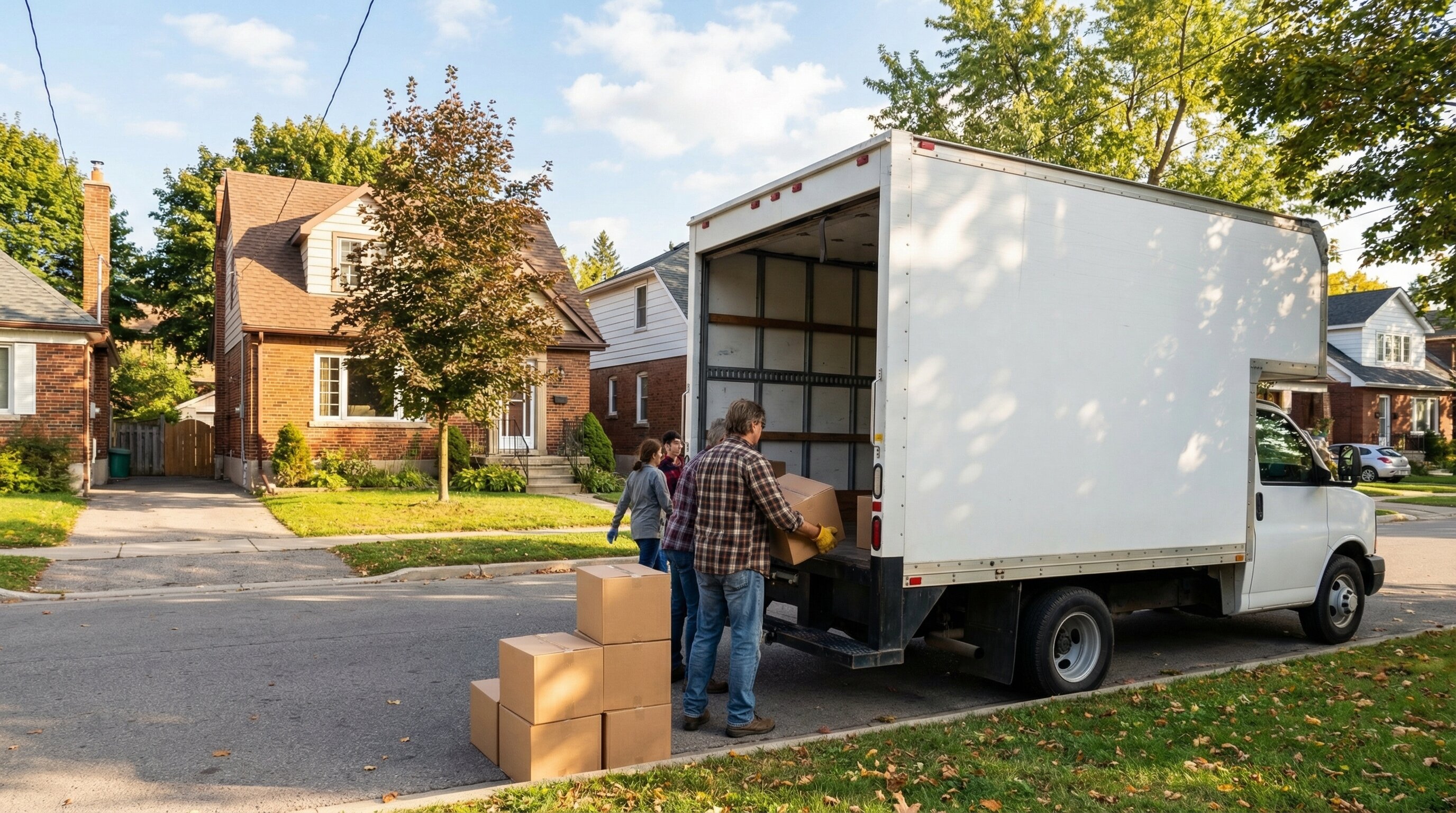
We went room to room. Photos, yes. A particular rocking chair, yes. Her husband’s tools, she decided to give to her son. The rest, she kept saying “I don’t know what to do with all of this.” I told her she didn’t have to. She needed to fill a van with the things that mattered. Everything else could stay.
She closed three weeks later. She cried a little at the end, but it wasn’t from stress. She told me it felt like permission she didn’t know she needed. That she’d been stuck for months because she thought she had to solve the stuff problem before she could solve the house problem.
She didn’t. And most sellers in her situation don’t either.
Does Leaving Stuff Behind Affect Your Cash Offer?
This is the question most sellers ask, and the honest answer is: it depends on the volume, but it’s rarely a dramatic reduction. A cash buyer prices a property based on its after-repair value, minus estimated renovation and carrying costs. Disposal is one line item in that calculation.
Based on offers made across Winnipeg properties, a standard household’s worth of furniture and belongings typically represents $500-$2,500 in disposal and labor costs for the buyer. That’s the range it may affect an offer by, depending on volume. A home with extreme accumulation, multiple outbuildings, or hazardous material disposal needs will see a larger adjustment.
What doesn’t affect the offer: normal wear, personal decor choices, or the presence of appliances. Buyers expect those. What does matter is anything that adds significant disposal cost or creates a liability, such as chemicals, certain electronics, or structural items that require special handling.
The practical takeaway is this: if you’re weighing the cost of junk removal ($1,500-$3,000) against the offer adjustment ($500-$2,500), the math often favors leaving things and accepting a small reduction over spending money and time on a self-managed cleanout.
How Does This Affect Your Closing Timeline?
Belongings rarely delay a cash sale, but they can delay a traditional one. On the MLS, buyers expect a vacant or professionally staged home. Leaving furniture and personal items behind creates issues during showings, inspection negotiations, and possession-date logistics.
With a cash sale, none of that applies. The buyer is purchasing the property in its current state. Closing dates are set based on what timeline works for the seller, not what the buyer needs to arrange financing or inspection conditions. Most cash sales in Winnipeg close in 2-4 weeks from the offer, with flexible possession dates that give sellers time to collect personal items without pressure.
The one thing that can slow a cash sale down is indecision on the seller’s side about what to take. This is worth thinking through before closing is scheduled. Make a list of what matters. Give yourself one walkthrough to collect it. Then let the rest go.
Citation Capsule
Professional junk removal in Winnipeg costs between $500 and $3,000+ per truckload for household contents, according to 1-800-GOT-JUNK’s 2025 pricing data. A 2022 CREA survey found roughly 40% of Canadian home sellers reported difficulty sorting belongings during the sale process (CREA, 2022). For sellers working with a cash buyer, belongings left behind are typically factored into the buyer’s disposal estimate rather than creating a hard barrier to closing.
Frequently Asked Questions
Can you leave stuff behind when selling to a cash buyer?
Yes. One of the core advantages of a cash sale is that you’re not required to empty the home. Take what’s personal, leave the rest. The buyer accounts for disposal costs in their offer. Most sellers in fast-sale situations leave behind furniture, appliances, and general household contents without any issue.
Does a house full of junk reduce a cash offer?
It can, but the adjustment is usually modest. A typical household’s worth of belongings represents roughly $500-$2,500 in disposal costs for the buyer. Extreme accumulation, hazardous materials, or multiple outbuildings with contents may push that figure higher. For most sellers, the reduction is smaller than what they’d spend on junk removal themselves.
Does the seller have to clean the house before closing?
No, not with a cash buyer. A cash sale is an as-is transaction, meaning the buyer accepts the property in its current condition, belongings and all. There are no cleaning requirements, no staging expectations, and no inspection-driven demands to tidy up before the sale can proceed.
What happens to items left in a house after closing?
Once the sale closes, the property and everything in it belongs to the buyer. Items left behind become the buyer’s responsibility to sort, donate, or dispose of. A reputable cash buyer will handle this as part of their normal renovation and acquisition process. Sellers should be clear about any items they want to retrieve before the closing date is finalized.
What’s the fastest way to get rid of stuff when selling a house quickly?
The fastest combination is: take the personal items yourself, donate what’s in good condition to Habitat for Humanity ReStore or Siloam Mission in Winnipeg, hire junk removal for anything remaining, and leave the rest for the buyer. If time is extremely tight, skip all of that and leave everything. A cash buyer accounts for it.
*Have a Winnipeg story about dealing with a house full of belongings during a sale? We’d love to hear what worked (and what didn’t). Add your experience here to help other local sellers.*
Closing: You Don’t Have to Solve Everything Before You Can Sell
The stuff in the house feels like a prerequisite. Like you have to deal with that before you can deal with the sale. In a traditional listing, that’s largely true. On the MLS, you’re presenting a property to buyers who want to imagine themselves living there, not sorting through someone else’s belongings.
A cash sale is different. The buyer isn’t buying a lifestyle. They’re buying a property, and they’re equipped to handle whatever’s inside. You solve the problem you need to solve, which is moving on from the house, and let them solve the problem they’re equipped for.
Take what matters. Leave the rest. It really can be that simple.
If you’re ready to skip the cleanout conversation and just get a number on your property, get a free cash offer and we’ll walk through the whole process together. No pressure, no obligation.
This overlap between clearing belongings and moving on is especially common for homeowners who are also rightsizing. If that’s you, our post on downsizing your living space with a cash sale in Winnipeg walks through the logistics of selling a larger home and moving into something smaller — stuff and all.
About the Author
Renz Javing is the owner of webuyhouseswinnipeg.com, a local cash home buying company that purchases properties in any condition across Winnipeg. He specializes in estate sales, fast closings, and situations where sellers need a straightforward process without the pressure of a traditional listing.
