
Foundation problems are one of the most stressful things a Winnipeg homeowner can discover. Cracks spreading across a basement wall. A floor that noticeably slopes. A door that won’t close anymore. Once you see it, you can’t unsee it.
Foundation problems don’t automatically mean you’re stuck. Whether you choose to repair before listing or sell as-is, the decision gets easier once you understand what cash buyers in Winnipeg actually look for. Our complete guide on how to sell your house fast in Winnipeg covers every option — repairs vs. as-is, timelines, and what to expect from each type of buyer.
The question most homeowners ask next is: can I even sell this house?
The short answer is yes. But the path looks different depending on the severity of the damage, your timeline, and whether you want to repair before listing or sell the home as-is. This post walks through the realistic options, the numbers, and what buyers actually want to know.
If you’ve been wondering whether your home qualifies as a problem property, foundation issues almost always put it in that category. Read on to understand exactly where you stand.
Key Takeaways
– Foundation problems affect an estimated 1 in 5 older Winnipeg homes due to clay soil movement (Canada Mortgage and Housing Corporation, 2023)
– Repair costs range from $500 for minor cracks to $80,000+ for severe structural failure
– Manitoba law requires you to disclose known foundation defects to buyers
– Traditional buyers and banks often walk away, but cash buyers assess these homes differently
– Selling as-is is a legitimate, legal, and often faster option than repairing first
Why Are Foundation Problems So Common in Winnipeg?
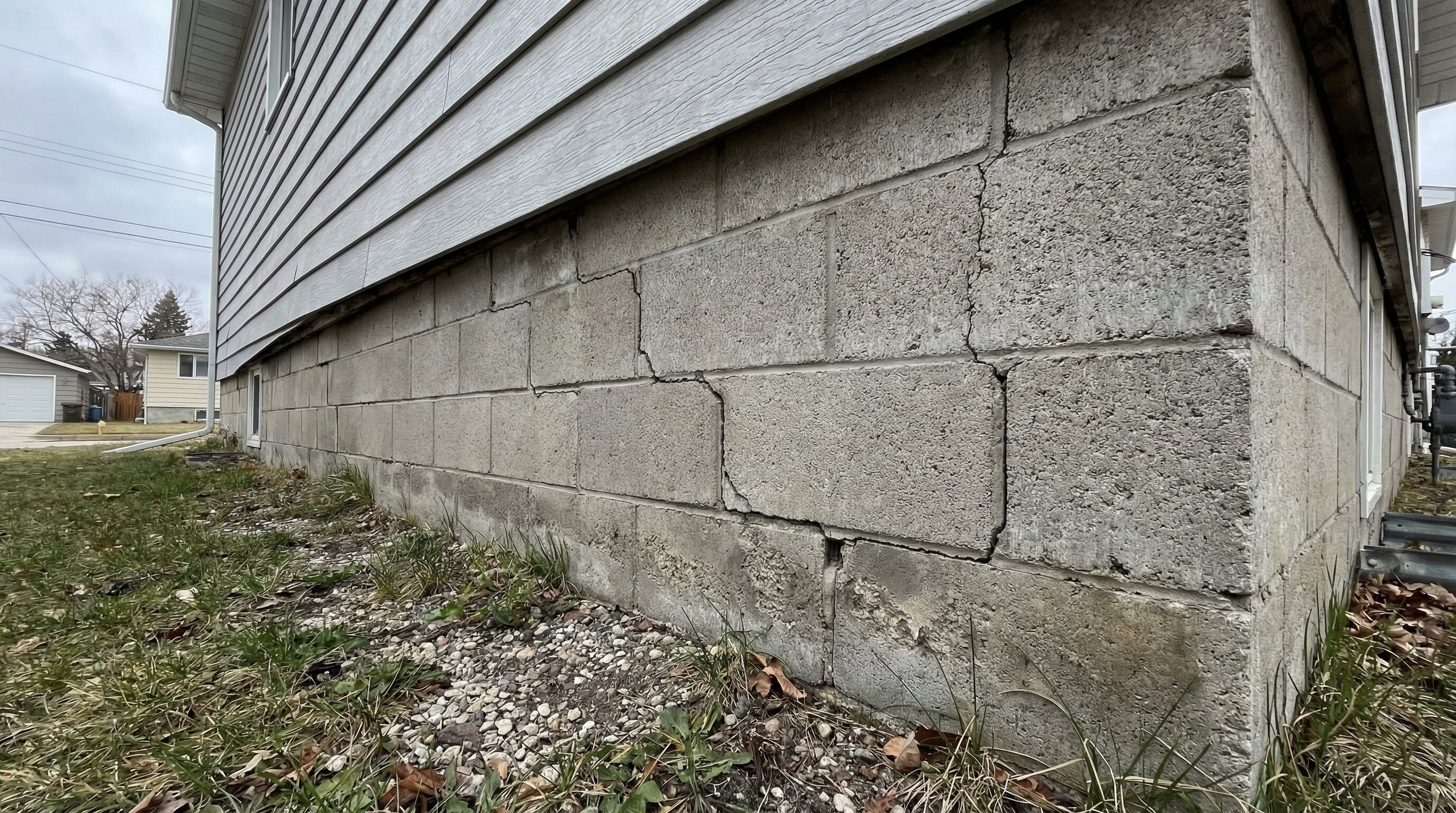
Foundation issues affect roughly 1 in 5 older homes in Winnipeg, according to Canada Mortgage and Housing Corporation (2023). The reason comes down to the soil. Winnipeg sits on a thick layer of Leda clay that expands when wet and shrinks when dry. The freeze-thaw cycle pushes foundations in opposite directions every single year.
Winnipeg winters reach -30°C or colder, and the frost line drops over four feet deep (Environment and Climate Change Canada, 2024). That repeated expansion and contraction is hard on any foundation. Add proximity to the Red River and a high water table in many neighbourhoods, and the conditions for foundation movement are almost guaranteed over time.
In my experience buying homes across Winnipeg, foundation issues come up more often than most homeowners expect. The clay soil here doesn’t just shift once and stop. It moves every single year. Some homes handle it fine for decades. Others start showing stress cracks within 20 years of being built. The age of the home matters, but so does the original construction quality and the specific lot.
What Types of Foundation Problems Show Up in Winnipeg Homes?
Foundation damage comes in several forms, and not all of them are equally serious. Knowing what you have helps you understand your options and communicate honestly with buyers.
Settling and Sinking
Settlement happens when the soil beneath a foundation compresses or shifts unevenly. One corner of the house drops slightly while another stays level. You’ll notice sloped floors, sticking doors, and diagonal cracks at window corners. Minor settling is common and manageable. Significant differential settling, where sections drop at different rates, is more serious.
Vertical and Diagonal Cracks
Vertical cracks in poured concrete walls are often caused by concrete curing or minor settlement. They’re common and frequently cosmetic. Diagonal cracks, especially those wider than 6mm, suggest differential movement and warrant a closer look. Stair-step cracks in block foundations follow the mortar joints and typically indicate soil movement.
Horizontal Cracks and Bowing Walls
Horizontal cracks are the most serious type. They indicate lateral soil pressure pushing in against the wall. A bowing or leaning foundation wall means the structure is actively being compressed. Left unaddressed, this can lead to wall collapse. These situations typically require urgent attention and significant cost to repair.
Water Infiltration and Wet Basements
Water coming through foundation cracks is both a symptom and a cause. The moisture weakens concrete over time, accelerates freeze-thaw damage, and creates conditions for mould. Wet basements often trace back to foundation cracks, failed weeping tile, or grading problems.
Many Winnipeg sellers are dealing with both water damage and foundation issues at the same time, which compounds the selling challenge.
How Much Does Foundation Repair Cost in Winnipeg?
Repair costs vary widely based on the type and extent of damage. According to the Manitoba Home Builders’ Association (2024), homeowners should expect the following ranges for professional foundation repair in Winnipeg:
- Minor cracks (cosmetic, non-structural): $500 to $3,000. Epoxy injection or hydraulic cement fills small vertical cracks. Quick, affordable, and largely DIY-accessible for minor cases.
- Moderate damage (significant cracking, minor water infiltration): $5,000 to $20,000. Includes interior waterproofing membranes, sump pump installation, and crack repair with reinforcement.
- Severe damage (bowing walls, major settlement, structural compromise): $30,000 to $80,000+. Underpinning, wall anchors, helical piers, or full foundation replacement fall in this range.
These are contractor estimates. Getting multiple quotes is essential because pricing varies considerably. A structural engineer’s assessment, which typically costs $500 to $1,500, is worth the investment before making any repair decisions. It tells you what you’re actually dealing with rather than relying on a contractor’s diagnosis tied to their own bid.
When I assess a home with foundation concerns, I bring in a structural engineer quote as part of my own due diligence. This is something I do for myself to understand the real scope of work. It also means I can have a transparent conversation with the seller about what the numbers actually look like rather than guessing.
Will Banks Finance a House With Foundation Problems?
Traditional mortgage lenders in Canada treat foundation issues as a significant risk factor, and many will decline to finance homes with active structural problems. CMHC guidelines require that properties financed under insured mortgages meet minimum property standards, which include structural integrity (2024).
When a buyer’s lender orders a home appraisal, the appraiser notes visible structural defects. If the report flags foundation concerns, the lender may refuse to advance the mortgage until repairs are completed and certified by an engineer. This is a common reason deals fall apart after conditional acceptance.
The practical result for sellers is that most traditional buyers, even if they personally want the house, can’t get financing approved. They’d need to be cash buyers or use alternative lenders at significantly higher rates. This narrows your buyer pool considerably when selling through traditional channels.
In conversations with Winnipeg sellers who’ve tried listing foundation-problem homes on MLS, a recurring pattern emerges: they get showings, they get interest, but the deals die at the financing stage. The accepted offer collapses when the buyer’s bank sees the inspection report. Sellers end up relisting and starting over, sometimes two or three times.
What Does Manitoba Law Require You to Disclose?
Manitoba’s real estate disclosure rules require sellers to disclose known material defects that could affect a buyer’s decision to purchase or the price they’d pay. Foundation problems almost always qualify as material defects under The Real Estate Services Act of Manitoba.
You are required to disclose:
– Known foundation cracks you’re aware of
– History of water infiltration or basement flooding
– Any previous foundation repairs done on the property
– Structural issues identified in past inspections
You’re not required to hire an engineer or identify problems you genuinely don’t know about. But if you know the problem exists, you cannot legally conceal it. Failing to disclose known defects can expose you to legal liability after the sale.
The disclosure requirement applies whether you sell through a realtor or privately. It also applies when selling to a cash buyer. Honest disclosure protects you legally and builds trust with the buyer, whatever form the transaction takes.
Why Do Cash Buyers Still Purchase Foundation-Problem Homes?
Cash buyers approach these properties differently from traditional buyers because they’re not constrained by mortgage lender requirements. CMHC estimates that roughly 20% of investment property purchases in Canada are completed without mortgage financing (2024). Cash buyers can assess the risk themselves and factor repair costs directly into their offer.
The logic is straightforward. A home worth $350,000 repaired and selling retail might be worth $270,000 to a cash buyer who plans to spend $40,000 fixing the foundation. The buyer accounts for repair costs, holding costs, and profit margin. The seller gets certainty, speed, and no repair obligations.
The homes that scare off every realtor and traditional buyer aren’t unsellable. They’re just priced for a different buyer type. In Winnipeg’s market, serious foundation damage is priced in, not ignored. A transparent, well-documented assessment of what the damage actually is, rather than vague language or concealment, actually increases a cash buyer’s confidence in making an offer.
Understanding cash buyer inspections helps you know what to expect and how to prepare for that conversation.
How to Sell a House With Foundation Problems: 4 Steps
Step 1: Get an Independent Structural Engineer Assessment
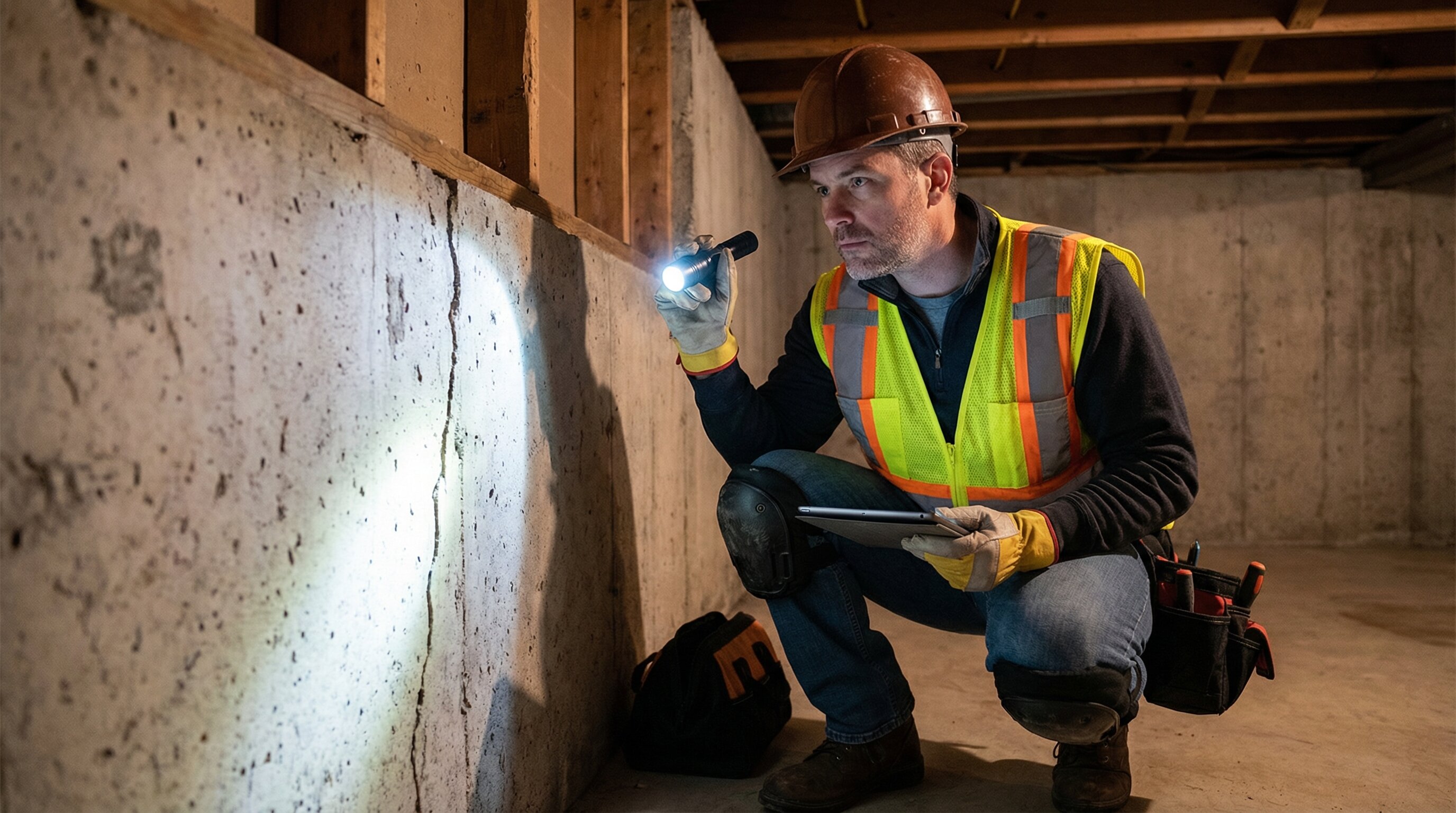
Before you price or list your home, know exactly what you’re dealing with. A licensed structural engineer’s report, typically $500 to $1,500 in Manitoba, gives you a factual basis for conversations with any buyer type. It prevents surprises and gives you legal protection because you’ve disclosed the condition thoroughly.
Step 2: Decide Whether to Repair or Sell As-Is
Run the numbers honestly. If repair costs are $5,000 and they add $20,000 in value, repairing makes sense. If repair costs are $50,000 and your neighbourhood’s ceiling limits your upside, selling as-is saves money and time. For severe damage, the as-is route often produces better net proceeds when you account for contractor delays, permit timelines, and carrying costs.
Step 3: Understand Your Disclosure Obligations
Complete your seller disclosure form accurately. Document everything you know: when you first noticed the problem, what repairs (if any) were attempted, any engineering reports you have. Buyers, especially cash buyers, respect transparency. It also protects you from claims after closing.
Step 4: Choose the Right Buyer Type
If you repair and the home meets lender standards, MLS is a valid path. If the foundation is damaged and you want to sell without repairs, focus on cash buyers who specialize in as-is purchases. Request offers from multiple parties where possible. Evaluate total net proceeds, not just the top-line price, by factoring in repair commitments, closing timelines, and certainty of close.
If you’re ready to skip repairs entirely, you can get a cash offer as-is and find out what your home is worth in its current condition.
Renz’s Experience With Foundation-Problem Homes
*The following is a placeholder for a real anonymized seller story. Replace with an actual case from your experience.*
I’ve bought homes in Winnipeg where the foundation cracks were so visible and widespread that every realtor who walked through told the owner the house was unsellable. One case I remember involved a bungalow in an older neighbourhood where horizontal cracking had developed along the full length of one basement wall. Two traditional buyers had already walked away after their inspections.
The owner had lived there for 22 years and had nowhere to go fast. He assumed he’d have to sink $40,000 into repairs he couldn’t afford before anyone would touch it.
I brought in a structural engineer first. The assessment came back with a repair scope lower than anyone expected. I made an offer based on the real cost of the work, not an inflated fear number. We closed in three weeks. The seller moved to a rental property he’d already found, with enough from the sale to settle his remaining mortgage and have cash left over.
Not every case works out that cleanly. But a clear-eyed assessment almost always produces a better outcome than months of trying to list through traditional channels and watching deals die at the financing stage.
Frequently Asked Questions
Can I sell a house with foundation problems in Winnipeg without fixing anything?
Yes. There’s no legal requirement to repair a foundation before selling. You must disclose known defects, but you can sell the property in its current condition. Cash buyers and investors regularly purchase homes with foundation damage in Winnipeg. The offer will reflect the cost of repairs, but you avoid the upfront expense and delay of completing the work yourself.
How much will foundation problems reduce my home’s sale price?
Reduction depends on the severity of the damage and the cost to repair. For minor cosmetic cracks, the impact may be minimal. For severe structural damage requiring $40,000 to $80,000 in repairs, expect the offer price to reflect those costs plus a buyer’s risk premium. According to HomeAdvisor (2024), serious foundation issues reduce home value by 10-30% on average, though Winnipeg’s clay soil conditions can push that higher in extreme cases.
Do I have to disclose foundation problems in Manitoba?
Yes. Manitoba’s real property disclosure requirements under The Real Estate Services Act require sellers to disclose known material defects. Foundation problems are considered material defects. Concealing a known issue creates legal liability after the sale. Disclose everything you know, document it in writing, and keep a copy.
Will a cash buyer inspect the foundation before making an offer?
Most serious cash buyers will do some form of property assessment, which may include walking the basement, reviewing any existing reports, or bringing in a structural engineer. This is normal due diligence, not a red flag. A buyer who skips all assessment and makes a full offer sight unseen should raise questions, not comfort. Learn more about what to expect from cash buyer inspections.
What’s the fastest way to sell a Winnipeg house with a bad foundation?
Contacting a cash buyer who specializes in as-is properties is typically the fastest route. You skip the repair phase, the MLS listing period, and the financing contingency that kills most traditional deals. A straightforward cash transaction in Winnipeg typically closes in 2 to 4 weeks from accepted offer, compared to 60 to 90 days for a conventional sale, according to Manitoba Real Estate Association data (2024).
Is it better to repair the foundation or sell as-is?
It depends on the numbers. If repairs are minor and the retail price increase outweighs costs and delays, repairing makes sense. If damage is severe, repair timelines are long, or you need to sell quickly, as-is typically produces a better outcome when you factor in carrying costs, permit waits, and the risk that lender financing still falls through. Run both scenarios with real numbers before deciding.
Conclusion
Selling a house with foundation problems in Winnipeg is harder than a standard sale. But it’s not impossible, and for many homeowners it’s more straightforward than they expect once they understand the actual options.
The soil conditions here create foundation stress that most other Canadian cities don’t face at the same intensity. That means more homes with this problem, more buyers who’ve seen it before, and a market that’s worked out ways to transact on these properties honestly.
Know what you have. Disclose it properly. Choose the buyer type that fits your timeline and financial situation. Those three steps get most sellers where they need to go.
If your home has other condition issues alongside the foundation — mould, water infiltration, or previous flood damage — we’ve covered both in detail: selling a house with mould in Winnipeg and how to sell a house with water damage in Winnipeg. The process is similar, and cash buyers evaluate all of it together.
If your foundation situation is severe and you want to skip the repair process entirely, getting a factual cash offer based on an honest assessment is usually the clearest way forward.
What Winnipeg homeowners say about working with us:
Get a cash offer as-is and find out what your home is worth without making a single repair.
About the Author
Renz Javing buys houses as-is in Winnipeg through webuyhouseswinnipeg.com. He works directly with homeowners facing difficult selling situations, including foundation damage, estate properties, and homes that didn’t sell on MLS. Every offer he makes is based on a real assessment of what the property needs.
*Published: April 26, 2026 | Updated: April 26, 2026*
