
Code violations don’t have to end your sale. Winnipeg homeowners dealing with open property standards orders, unpermitted renovations, or fire safety deficiencies still have real options. The path forward depends on understanding what you’re dealing with, what disclosure laws require, and which buyer is actually going to say yes.
According to the City of Winnipeg, property standards complaints and inspections have consistently risen over the past five years, with the city issuing thousands of orders annually under the Winnipeg Property Standards By-law No. 141/2011. Most of those properties still change hands every year. The question isn’t whether you *can* sell with violations. It’s how.
If your home has been flagged as a problem property, violations are usually part of a larger picture. This guide walks through the most common violation types in Winnipeg, what they cost to fix, and how to sell without making a single repair.
Key Takeaways
– The City of Winnipeg issues property standards orders under By-law No. 141/2011, and open orders complicate traditional sales.
– Most banks will not finance homes with open code violations — this kills deals with listed buyers.
– Manitoba sellers must disclose known material defects, which includes most violations.
– Fixing violations costs anywhere from $2,000 to $50,000+ depending on the type.
– Cash buyers purchase homes with violations as-is, factoring remediation into their offer.
What Are the Most Common Code Violations in Winnipeg?
Winnipeg’s older housing stock, much of it built before the 1980s, generates a predictable set of violations. The City of Winnipeg’s Property Standards By-law covers everything from structural integrity to heating systems. Understanding which category your violation falls under helps you estimate costs and timelines before you decide how to proceed.
Electrical Violations
Knob-and-tube wiring is the most common electrical issue in Winnipeg homes built before 1950. (Electrical Safety Authority of Canada, 2023). Insurance companies often refuse to cover homes with active knob-and-tube, which triggers a cascade of problems at sale. Upgrading a full panel and rewiring a 1,200 sq. ft. home typically runs $8,000 to $20,000.
Unpermitted electrical work is a separate issue. If a previous owner added circuits, outlets, or a sub-panel without a permit, there’s no inspection record. That becomes a code violation on title searches. A licensed electrician needs to inspect, correct, and permit the work retroactively.
Plumbing Violations
Older clay or cast-iron sewer lines that have cracked or collapsed are a common deficiency flagged during City inspections. (City of Winnipeg Open Data, 2024). A full main sewer line replacement in Winnipeg ranges from $5,000 to $15,000 depending on depth and access. Galvanized supply lines that have corroded past safe tolerances are another frequent item, costing $3,000 to $8,000 to replace.
Unpermitted Additions and Basement Suites
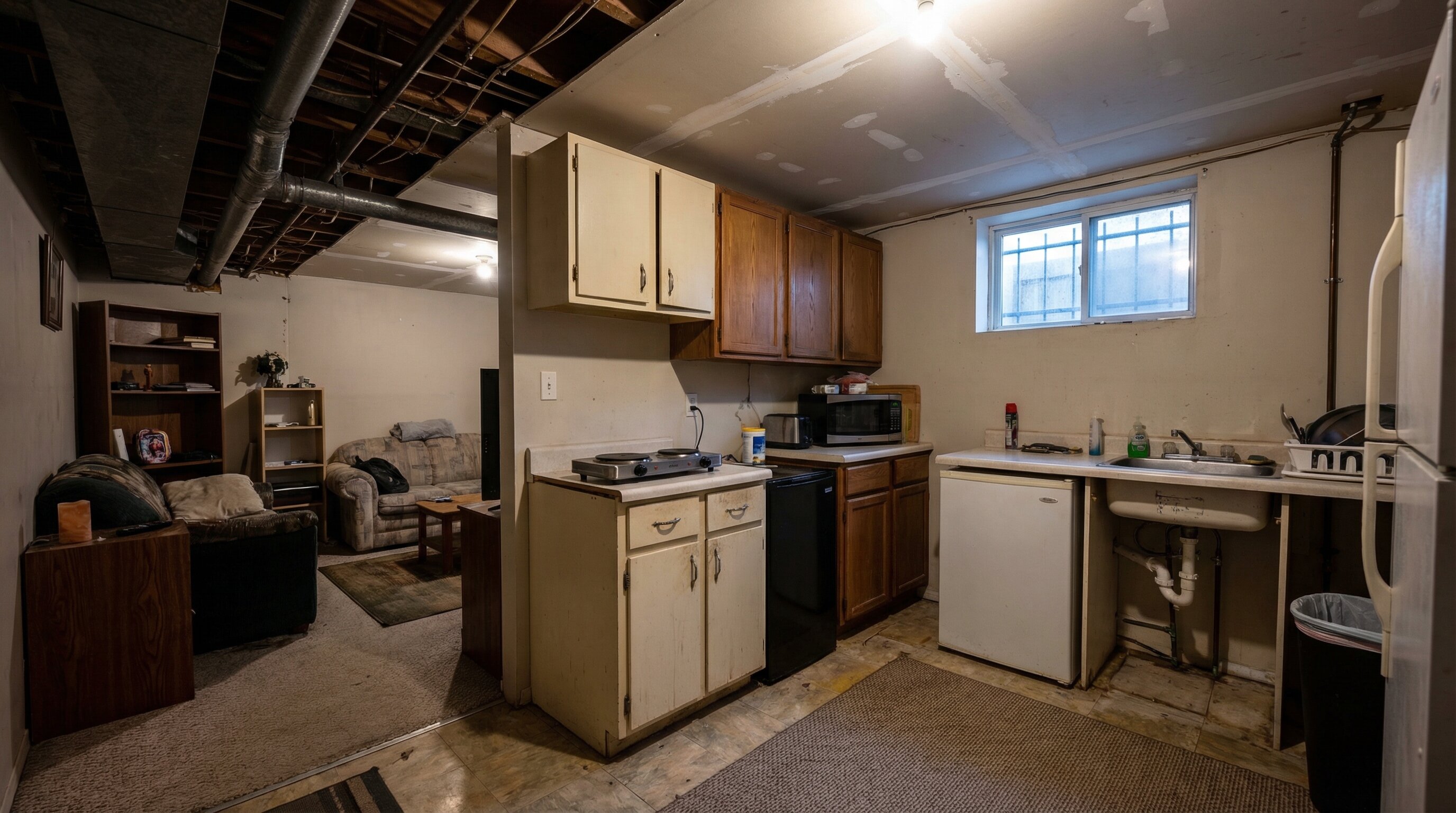
This is the violation I see most often. Older Winnipeg bungalows, especially those built in the 1950s and 1960s, were modified by owners who added basement suites to generate rental income. Many of those suites were never permitted. The work shows up in a title search or during a pre-listing inspection as a bylaw deficiency.
I’ve bought several homes where the basement suite had no permits on record. The suite itself was often functional and well-built, but without the permit history, it’s technically non-compliant. When I make an offer on those properties, I factor in either the cost of retroactive permitting or my own remediation plan after closing. Sellers don’t need to fix it first.
Retroactive permitting for a basement suite in Winnipeg can cost $1,500 to $5,000 in permit fees and inspection costs, not counting any required modifications. If the suite doesn’t meet current egress, ceiling height, or fire separation standards, renovation costs can climb to $15,000 or more.
Fire Safety Violations
Missing or non-functioning smoke detectors are a surprisingly common violation listed in property standards orders. (National Fire Protection Association, 2024). These are cheap to fix but they still generate orders. More serious fire safety violations involve non-compliant fire separation between a suite and the main dwelling, or blocked or undersized egress windows in basement bedrooms. Fire separation upgrades alone can run $5,000 to $25,000.
Why Do Banks Refuse to Finance Homes With Open Violations?
Banks won’t lend on a property that carries open code violations because the collateral itself is legally impaired. (Canada Mortgage and Housing Corporation, 2024). The lender holds the title as security for the loan. An open property standards order means the city has a legal claim against the property, which ranks ahead of the mortgage in some remediation scenarios.
In our experience reviewing offers alongside traditional listings, financed buyers have had their mortgage commitments pulled at the last minute when violations surfaced during the lender’s title review. The deal collapses. The seller loses weeks and has to re-list. This pattern is consistent and predictable.
This is why listing a violation-affected home on MLS is risky. You may attract interest from buyers who intend to finance. They make an offer, you accept, and then their lender’s underwriter or solicitor finds the open order. Deal falls apart. Even buyers with strong pre-approvals can’t override a lender’s property-specific requirements.
Understanding how a cash buyer home inspection works differently from a traditional financed transaction helps explain why cash is the cleaner path when violations exist.
What Does Manitoba Law Say About Disclosing Code Violations?
Manitoba’s real property disclosure rules require sellers to disclose known material defects. (The Real Property Act, Manitoba, current). A code violation or open property standards order almost always qualifies as a material defect. Failing to disclose it can expose a seller to post-closing litigation.
The key phrase is “known.” You’re required to disclose what you know. You’re not legally required to hire an inspector to go find problems you aren’t aware of. But if you’ve received a notice from the City of Winnipeg, received a property standards order, or know about unpermitted work, that information needs to be in the disclosure statement.
Many sellers believe that if they haven’t opened a letter from the city, they can claim ignorance. That’s a risky position. Courts and arbitrators look at what a reasonable person in your situation should have known, not just what you actively reviewed. Disclose what you know. It’s the cleaner path legally and it doesn’t actually hurt your position with a cash buyer who is pricing the violation in anyway.
How Much Does It Cost to Fix Common Violations?
Repair costs vary significantly based on the violation type, the age of the home, and how much of the work requires licensed tradespeople. Here’s a realistic range based on common Winnipeg projects.
| Violation Type | Common Fix Required | Estimated Cost (Winnipeg) |
|---|---|---|
| Knob-and-tube wiring | Full rewire to modern standard | $8,000 – $20,000 |
| Unpermitted basement suite | Permits + code upgrades or decommission | $5,000 – $20,000 |
| Missing egress window (basement bedroom) | Cut opening, install window | $1,500 – $4,000 |
| No GFCI outlets in wet areas | Electrical upgrade | $500 – $2,000 |
| Foundation drainage / moisture ingress | Drainage system + waterproofing | $5,000 – $30,000 |
| No smoke / carbon monoxide detectors | Install per current code | $150 – $500 |
The total can range from a few hundred dollars to well over $50,000, depending on how many violations exist and whether structural or systems work is involved. For sellers who don’t have cash reserves or who can’t manage a renovation project, fixing violations before listing is not always feasible.
Why Do Cash Buyers Purchase Homes With Code Violations?
Cash buyers operate outside the lending system entirely. They’re not subject to lender underwriting requirements or property condition minimums. (Real Estate Council of Canada, 2024). They assess the property on its own merits, factor in remediation costs, and price accordingly. The violation is a line item in their cost model, not a deal-killer.
That’s the core difference. A financed buyer needs the property to be lendable. A cash buyer needs the numbers to work.
Violations sometimes overlap with title issues. Understanding how liens and title issues are handled in a cash transaction is useful context if your property has both open orders and outstanding debts.
For sellers, this means you don’t have to fix anything before you get paid. The offer reflects the property’s as-is value. You close, you walk away, and the buyer handles whatever remediation or permitting comes after.
How to Sell a House With Code Violations in Winnipeg: 4 Steps
Selling with violations doesn’t need to be complicated. Here’s the process in plain terms.
Step 1: Get a Property Standards Report From the City
Contact the City of Winnipeg’s By-law Enforcement division and request a copy of any open orders against your property. You can also search your address in the City’s online property records. Knowing exactly what’s on record protects you during disclosure and helps a buyer price their offer accurately.
Step 2: Gather Documentation on Known Deficiencies
Pull any permits that were pulled (or not pulled) for past renovations. Collect contractor quotes if you’ve already gotten estimates on repairs. The more information you can provide to a buyer upfront, the faster the process moves. Cash buyers work faster when they’re not hunting for information.
Step 3: Request Offers From Cash Buyers
Get at least one offer from a direct cash buyer who is experienced with violation-affected properties. A buyer who has done this before won’t be surprised by what they find. They’ll price it, present terms, and let you decide. There’s no pressure and no obligation. The offer tells you what the market is for your property in its current condition.
Step 4: Review the Offer and Close on Your Timeline
A legitimate cash offer should include a clear purchase price, a closing date that works for your schedule, and no financing or inspection contingencies. Review it with a real estate lawyer if you have any questions about the terms. Closing typically takes two to four weeks once an offer is accepted.
If you want to skip directly to Step 3, you can get a free cash offer on your Winnipeg home right now, violations and all.
Frequently Asked Questions
Do I have to disclose code violations when selling in Winnipeg?
Yes, if you know about them. Manitoba’s real property disclosure rules require sellers to report known material defects. (The Real Property Act, Manitoba, current). An open property standards order from the City of Winnipeg qualifies. Failing to disclose can lead to post-closing legal claims from buyers.
Can I sell a house with an open property standards order in Winnipeg?
Yes. There’s no law preventing the sale of a home with an open order. The challenge is finding a buyer whose financing isn’t blocked by the violation. Cash buyers are not subject to lender requirements, which is why they’re the most practical option when open orders exist.
Will a cash buyer require repairs before closing?
No. Cash buyers purchase as-is. They account for repair and remediation costs in their offer price. (HomeLight Seller Resource Center, 2024). You don’t need to fix anything, clean anything, or make any improvements before closing.
How long does it take to sell a home with violations to a cash buyer?
Most cash transactions close in 14 to 30 days from accepted offer. (National Association of Realtors, 2024). That’s significantly faster than a traditional listing, which averages 60 to 90 days in Winnipeg’s market, and that timeline doesn’t account for the extra delays violations create when financed buyers are involved.
What happens to the code violations after I sell to a cash buyer?
The violations and any associated remediation obligations transfer to the new owner at closing. Once you sign the deed, the property is no longer your responsibility. The buyer accepts the property in its current condition, open orders and all.
Can I sell a house with an unpermitted basement suite in Winnipeg?
Yes. Unpermitted suites are one of the most common issues we see in older Winnipeg bungalows. A cash buyer can purchase the home knowing the suite is unpermitted, price the remediation or retroactive permitting into the offer, and handle it after closing. You don’t need to remove the suite or pull permits before the sale.
Ready to move forward? Our complete guide on how to sell your house fast in Winnipeg walks through the entire cash sale process — including what happens when a property has outstanding violations or deferred maintenance.
Conclusion
Selling a house with code violations in Winnipeg is harder through traditional channels, but it’s not impossible. Banks block financed buyers. MLS listings stall. But cash buyers operate on completely different terms. They know what violations cost to fix, they price accordingly, and they close without requiring you to do the repair work first.
The key steps are straightforward: know what’s on record, disclose what you know, and get an offer from a buyer who has experience with violation-affected properties. You don’t need to spend $20,000 rewiring a house you’re trying to sell. You don’t need to retroactively permit a basement suite before you can move on with your life.
What Winnipeg homeowners say about working with us:
If your property has open orders, unpermitted work, or a deficiency you don’t have the budget to fix, get a free cash offer and see what your options actually look like.
About the Author
Renz Javing buys houses as-is across Winnipeg through We Buy Houses Winnipeg. He specializes in properties with title complications, deferred maintenance, and bylaw deficiencies that make traditional sales difficult. He has personally purchased homes with unpermitted basement suites, open property standards orders, and significant structural issues.
