
Most people assume summer is the best time to sell a house in Winnipeg. Curb appeal is easier to photograph. Buyers are more active. The driveway doesn’t need to be shoveled before every showing. And honestly, that logic isn’t wrong, for a traditional listing. But it’s incomplete. Waiting 4-6 months to list in spring carries real costs that most sellers never factor in upfront.
Before deciding whether to wait for spring or sell now, read our guide on how to sell your house fast in Winnipeg — it covers every option available, including what a cash offer actually looks like.
This post breaks down what actually changes between a winter and summer sale in Winnipeg, what the data says about pricing and time on market, and why the “wait until spring” strategy costs more than most people expect.
Key Takeaways
– Winter listings in Winnipeg sit on the market longer on average, but they face less competition from other sellers.
– Every month you wait to sell adds hundreds or thousands in carrying costs (mortgage, heat, taxes, insurance).
– According to Winnipeg Realtors, spring sees the highest sales volume, but not always the highest sale prices.
– Cash buyers don’t care what month it is. No showings, no staging, no season required.
– For homeowners under financial pressure, the “wait until summer” plan often backfires.
– A Winnipeg winter costs roughly $1,500-$3,000/month to carry a vacant or unwanted property.
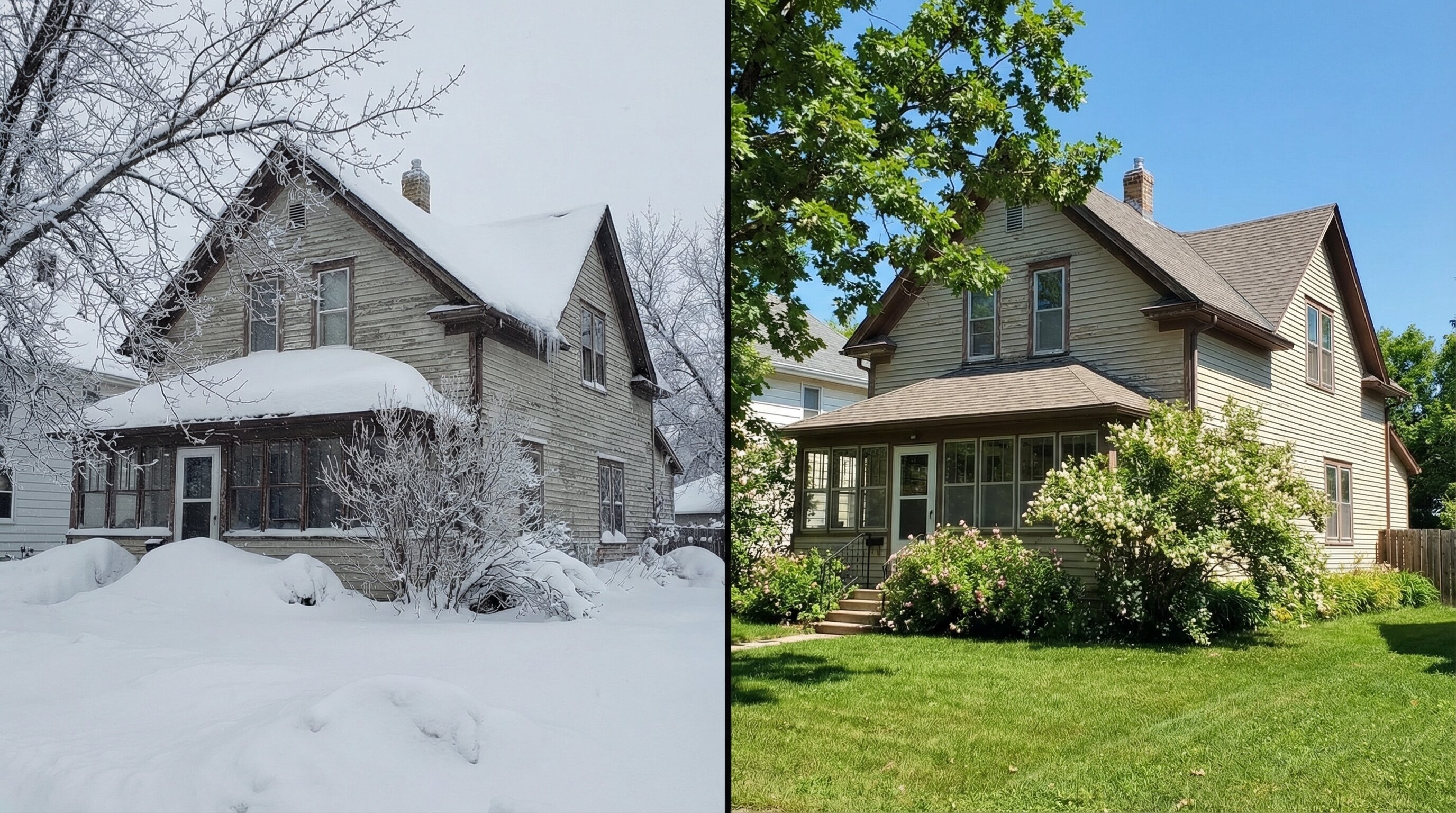
What Makes Winnipeg’s Real Estate Market Uniquely Seasonal?
Winnipeg is one of the coldest cities in Canada, and that shapes buyer and seller behaviour in ways that don’t apply in Vancouver or Toronto. According to the Winnipeg Regional Real Estate Board (WRREB), sales volume peaks sharply in May and June each year, then drops significantly from November through February. The gap between the busiest and slowest months can be as high as 50% in total transactions.
That seasonal swing creates two very different selling environments. Summer sellers deal with more competition but more active buyers. Winter sellers deal with fewer buyers but also far fewer competing listings.
The question isn’t which season is “better.” It’s which season works better for your specific situation.
Why Winnipeg Winters Hit Harder Than Other Markets
Winnipeg’s average January temperature sits around -16.4°C, often dipping below -30°C with wind chill (Environment Canada, 2024). That’s not a minor inconvenience for buyers. It affects everything: weekend open houses get cancelled, buyers reschedule showings, and home inspectors flag frozen pipes and ice damming as serious concerns. Winter selling here requires more coordination, more flexibility, and more patience from everyone involved.
How Does Buyer Behaviour Actually Shift Between Seasons?
The buyers who are shopping in January are different from the ones browsing in May. Winter buyers in Winnipeg are almost always serious. They’re not casually attending open houses on a Sunday afternoon. They have a reason to be looking: a job relocation, a separation, an estate sale, a lease ending. This creates a smaller but more motivated buyer pool.
Summer buyers are more numerous, but they’re also more selective. They have options. They’ll walk if the staging isn’t right, if the yard looks rough, or if the listing photos don’t pop. Competition among buyers is higher in summer, which can push prices up. But competition among sellers is also higher, which can cancel that advantage out.
What the Data Shows About Winnipeg Sale Prices by Season
According to the Winnipeg Regional Real Estate Board, the average residential sale price in Winnipeg in 2024 peaked in June at approximately $387,000, compared to a January average closer to $342,000 (WRREB Market Summary, 2024). That’s roughly a 13% gap. It sounds significant, and it is, if you’re comparing apples to apples. But most sellers aren’t comparing identical homes sold in different months. They’re comparing selling now versus waiting 5 months while the house sits empty.
What Does a Traditional Listing Actually Look Like in Winter vs. Summer?
A traditional MLS listing in Winnipeg winter comes with a specific set of challenges. First, curb appeal is almost impossible to showcase. Snow covers the yard, the driveway, and anything that would otherwise make the exterior look inviting. Listing photos taken in January often require wide-angle interior shots because the outside doesn’t sell the home. Buyers scroll past quickly.
Summer listings get the full package: green lawns, bright natural light, afternoon showings with doors open. Buyers can visualize themselves in the space. The property feels alive in a way it simply can’t in February.
Carrying Costs: The Number Most Sellers Ignore
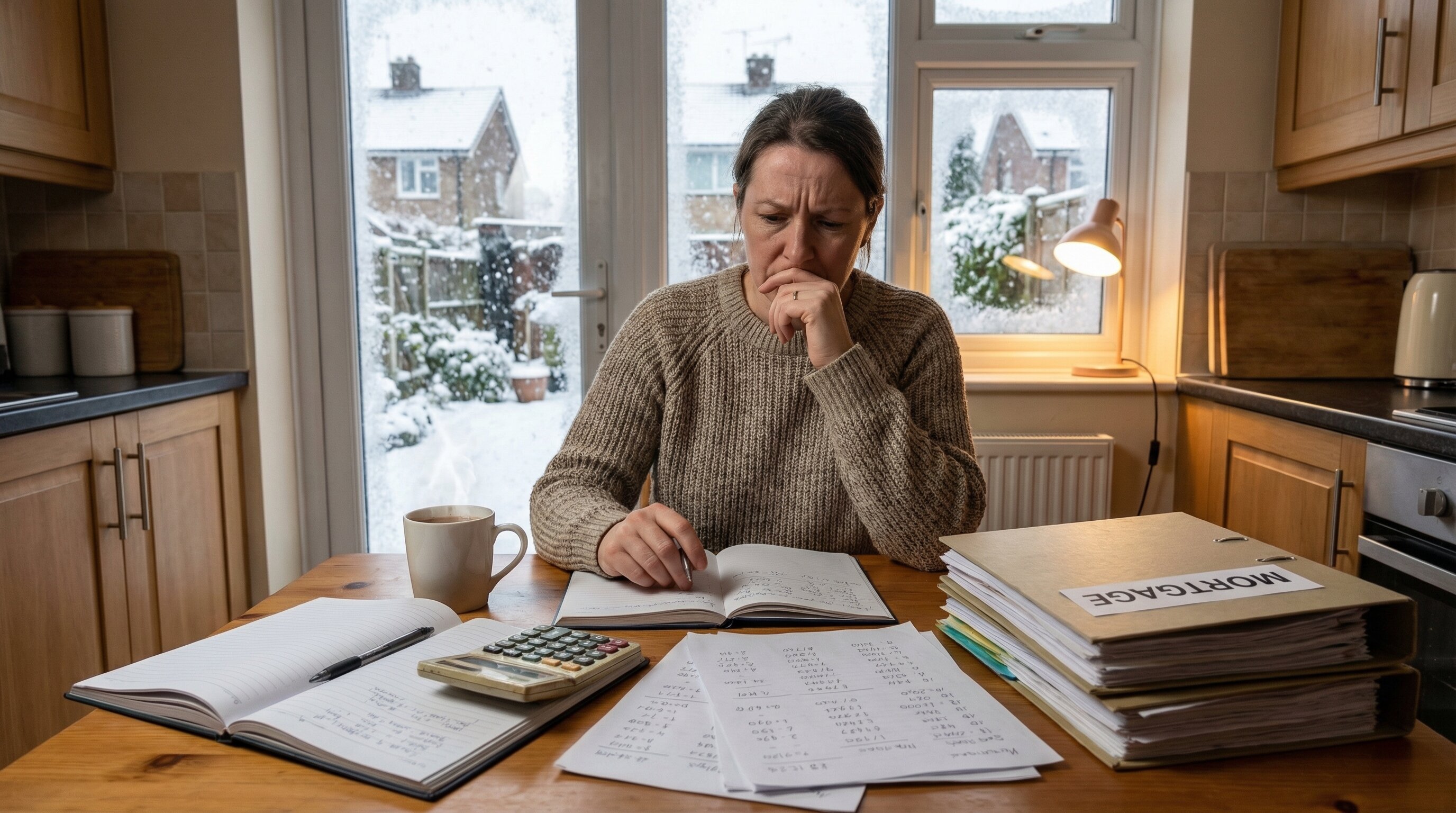
Here’s what the “wait until summer” plan actually costs you. A home with a $1,400/month mortgage, $350/month in property taxes, $200/month in home insurance, and $400/month in heat (not unusual for a Winnipeg winter) is costing you roughly $2,350/month to hold. For a full breakdown of what sellers pay at closing, see our guide on closing costs for home sellers in Manitoba. Over five months, that’s $11,750 you pay while waiting to list. That number changes the math entirely.
Why Cash Buyers Don’t Care What Season It Is
I remember sitting across from a homeowner in late November, let’s call her Linda. She’d inherited her late mother’s house in the North End. It needed work, the furnace was aging, and the backyard fence had seen better decades. Linda’s plan was simple: wait until April, do a few repairs, list it with a realtor, and get a “proper price” for it.
I asked her one question: “What’s it costing you each month to hold onto it?”
She hadn’t thought about it that way. We went through the numbers together. Mortgage carrying cost, property taxes prorated, heat to keep the pipes from freezing, home insurance on a vacant property (which costs more than an occupied one), and the repairs she was planning to front. We were looking at roughly $2,200/month in costs, plus about $8,000 in planned repairs.
Five months of that is $11,000 in carrying costs, plus the renovation spend. Her break-even just to “come out ahead” by waiting had climbed past $19,000.
She sold in January. The cash offer came in below what she’d imagined getting in spring, but after we stripped out the carrying costs and the repair budget she didn’t have to spend, she netted more than her spring-listing scenario would have produced. Not a little more. Thousands more.
The lesson isn’t that winter is always better. It’s that “wait until spring” isn’t free.
According to the Winnipeg Regional Real Estate Board’s 2024 annual market summary, residential sales in January and February average nearly half the volume of peak spring months, with average sale prices running 10-13% lower than June peaks. However, sellers who factor in 4-6 months of carrying costs on a vacant or unwanted property often find that a faster off-market sale produces a comparable or higher net return.
What’s the Real Cost Difference of Waiting 4-6 Months to Sell?
Waiting to sell in Winnipeg isn’t just an emotional decision. It’s a financial one, and the numbers don’t always point in the direction people expect. Here’s a simplified scenario: a home worth approximately $300,000 in summer may sell for $260,000-$270,000 in winter on the MLS. That $30,000-$40,000 gap feels large. But subtract $11,750 in carrying costs over 5 months. Subtract realtor commissions (typically 3-5% on a $300,000 sale, or $9,000-$15,000). Subtract closing costs on the seller’s side. The net gap narrows fast.
Running the Net Proceeds Comparison
A cash sale in January at $260,000 with zero commission, zero staging, zero repair costs, and no carrying costs may produce a higher net than a June MLS listing at $300,000 after fees, costs, and months of payments. For a side-by-side breakdown of both routes, see our guide on cash buyer vs. realtor in Winnipeg. We’ve found this scenario plays out more often than people expect, especially on inherited homes, vacant properties, or houses that need work. The “discount” a cash buyer offers often looks much smaller once you account for everything the traditional route actually costs.
Most online comparisons between winter and summer selling focus only on list price and volume, not on the full cost stack. Carrying costs, seasonal utility bills, and deferred decision-making are rarely included in that analysis. When you include them, the seasonal “disadvantage” of selling in winter shrinks considerably, and for some sellers, disappears entirely.
FAQ: Selling a House in Winter vs. Summer in Winnipeg
Is winter a bad time to sell a house in Winnipeg?
Not necessarily. Winter listings face fewer competing properties on the MLS, which can work in a seller’s favour. According to the Winnipeg Regional Real Estate Board, January listings in 2024 averaged 47 days on market, compared to 28 days in June. But winter buyers tend to be serious and motivated, which can mean fewer wasted showings and faster decisions.
Do houses sell for less in winter in Winnipeg?
On average, yes. WRREB data from 2024 shows winter sale prices running roughly 10-13% below June peaks. But “selling for less” only tells part of the story. Net proceeds depend on carrying costs, commission, repairs, and timing, not just list price. A lower offer with no fees and no waiting period can outperform a higher offer after costs.
How long does it take to sell a house in Winnipeg?
On the traditional MLS, average days on market in Winnipeg ranged from 28 days in peak summer months to 47+ days in winter during 2024 (WRREB, 2024). A cash sale, by comparison, typically closes in 7-21 days regardless of season.
Does cold weather affect the home inspection process in Winnipeg?
Yes, it can. Home inspectors in Winnipeg note that frozen ground limits assessment of drainage and foundation issues. Ice damming on roofs is harder to spot until spring. Some buyers will request a secondary inspection or include clauses around seasonal concerns. This adds complexity and potential renegotiation points to any winter sale. Cash buyers who purchase as-is skip the inspection process entirely.
Should I wait until spring to sell my house in Winnipeg?
It depends on your specific situation. If the property is occupied, well-maintained, and you can absorb 4-6 months of carrying costs comfortably, waiting for peak season may make sense. If the home is vacant, needs work, or you’re under any financial pressure, waiting until spring likely costs you more than it gains. Running the actual numbers on carrying costs versus the expected price difference is the only honest way to answer this question.
The Bottom Line: Season Matters Less Than Your Net Proceeds
Winnipeg’s real estate market is genuinely seasonal. That’s not a myth. Volume drops in winter, average prices drop in winter, and the process of showing a home is harder when it’s -25°C outside. Those are real factors.
But the “wait until spring” strategy is too often treated as a default assumption rather than a calculated decision. For homeowners carrying a vacant property, dealing with an inherited home, going through a separation, or simply wanting certainty over maximum theoretical price, waiting is often the more expensive choice.
The smarter move is to run your specific numbers. What are you paying each month right now? What’s a realistic sale price in winter versus summer, after all costs? What’s the value of having this done in three weeks instead of six months?
If you want to skip the calculation and just see what a cash offer looks like for your property, get a free cash offer today. There’s no obligation, and it gives you a real number to compare against the waiting game.
In our experience working with Winnipeg sellers year-round, the most common regret we hear is not from people who sold in winter. It’s from people who waited, spent months managing a property they’d mentally already let go of, and then sold for roughly the same net amount they could have gotten in January, minus the stress.
*Written by Renz Javing, a Winnipeg-based cash home buyer and the owner of We Buy Houses Winnipeg.*
